
Why does water pool in my yard after rain?
Around Tulsa, clay soil takes in rain slowly and the grade sends it to a low spot. Water still standing 48 hours after a storm means the yard needs a fix.
· Tulsa, Jenks, Bixby, Glenpool, Sapulpa, Sand Springs
The short answer
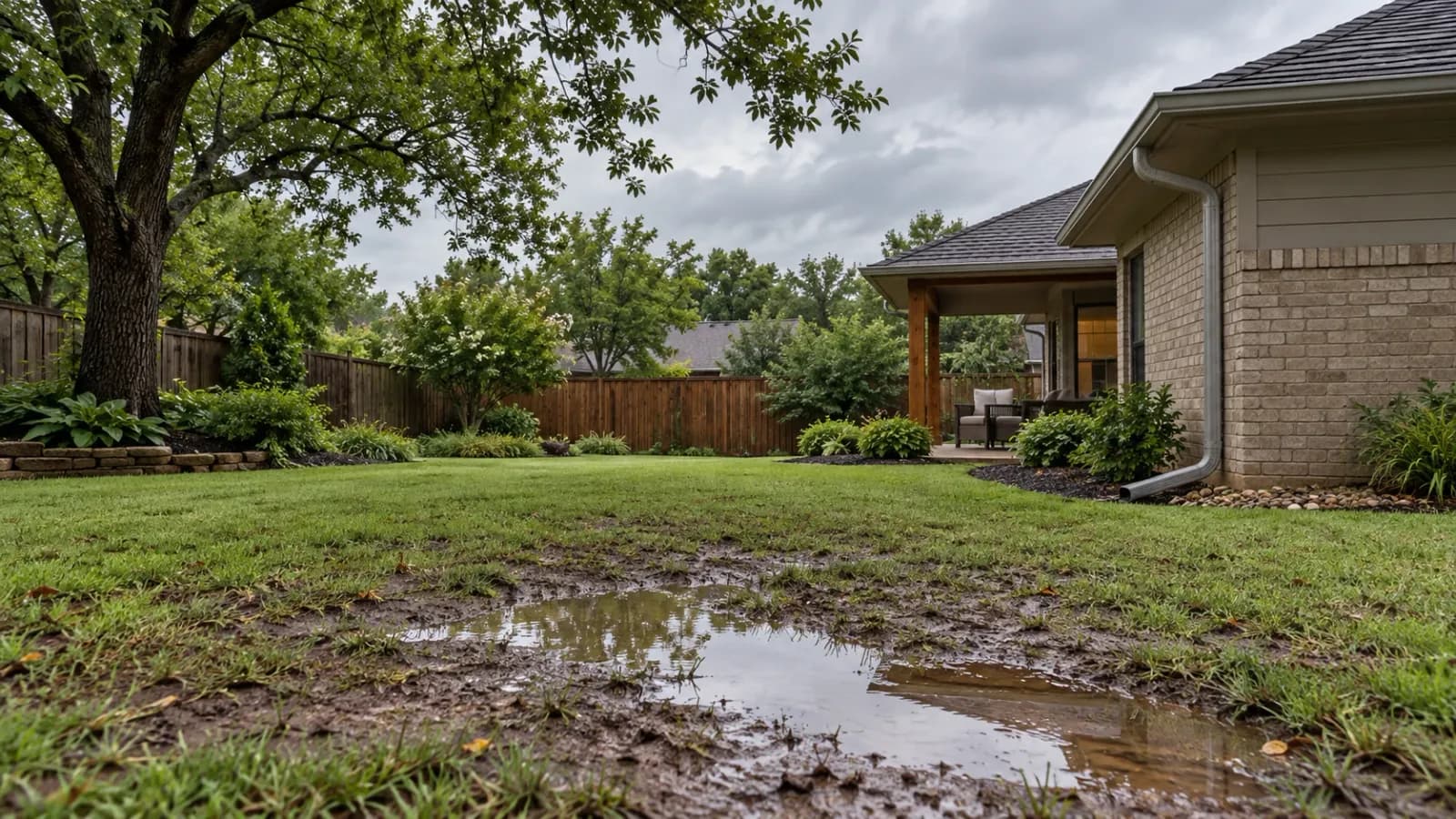
Water pools when rain falls faster than the soil can take it in and the ground gives it nowhere else to go. In the Tulsa area that usually means three things at once: clay soil that soaks up water slowly, a low spot or flat grade that collects the runoff, and a roof or driveway that sends extra water to the same place.
A puddle that drains within a day or two of a hard storm is normal. Oklahoma State University Extension's downspout guide says a yard's drainage should not let water pond for more than 48 hours after a rain. If yours stays wet longer than that, or the same corner turns soggy every spring, the yard has a drainage problem worth fixing.
Rain doesn't fall evenly through the year. The National Weather Service's 1991 to 2020 normals put Tulsa's May rainfall at 5.73 inches, against 4.37 in April and 4.65 in June.
Why Tulsa-area yards hold water
Clay soil soaks up water slowly
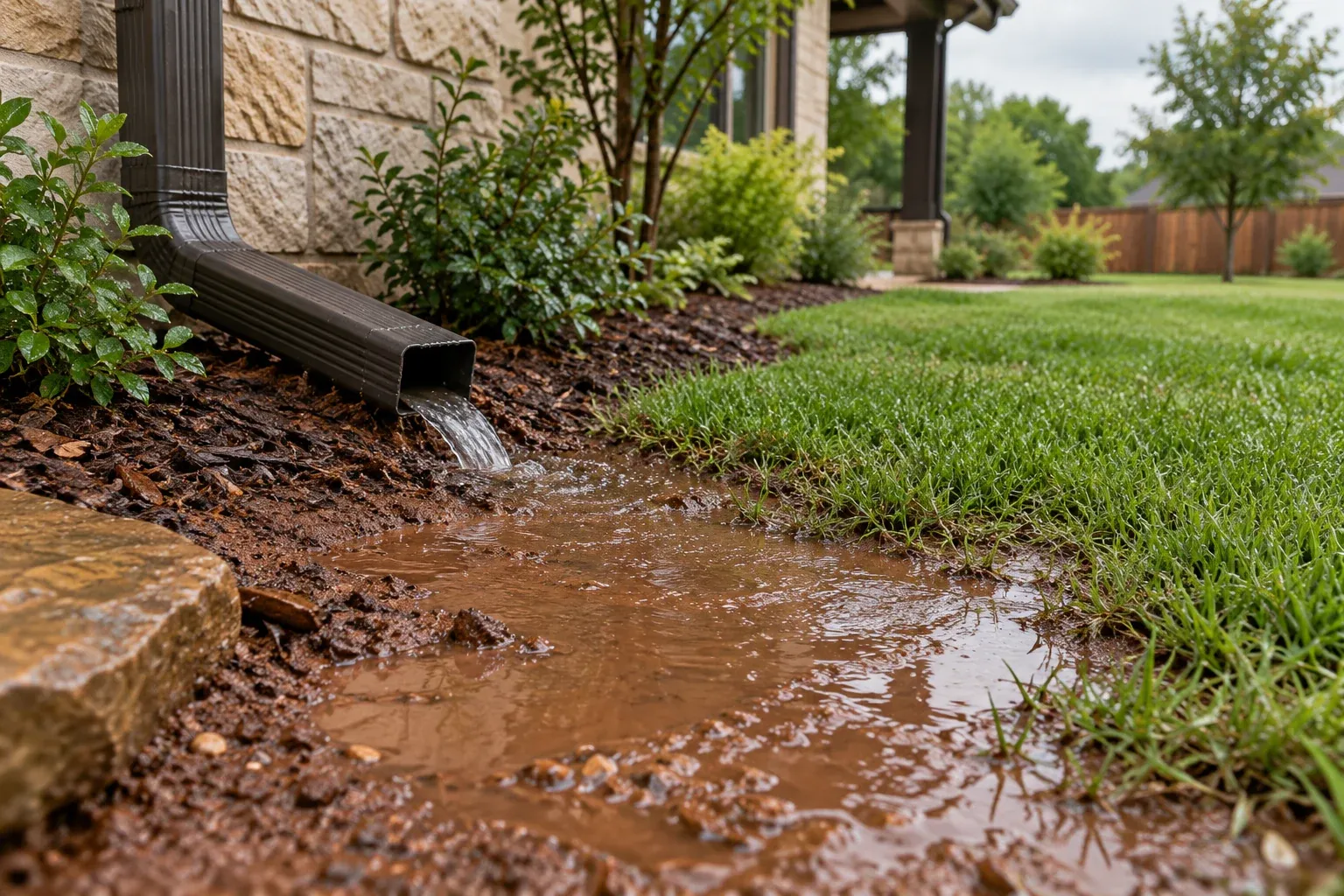
OSU Extension's drainage fact sheet says clay soils take in water slowly and crack during long dry spells, and that many Oklahoma soils have little sand. Its downspout guide sorts soils into federal hydrologic groups. Group D soils, high in clay, absorb little water and shed most of it as runoff.
You can check your own soil with OSU's ribbon test. Wet a small handful, roll it into a ball, then knead it between your fingers into a flat ribbon. If the ribbon falls apart, the soil is low in clay. If it holds its shape, the clay content is higher. OSU also points homeowners to the USDA Web Soil Survey, where you can type in an address and see the mapped soil.
Some yards have a second soil problem. OSU says high sodium is common in Oklahoma soils. Sodium breaks clay apart so the surface seals when wet and cracks when dry, and water sits in the same spot while salt builds up. A soil test through the county OSU Extension office can measure it, and OSU names gypsum as an economical treatment when the test calls for it.
The grade sends water to one spot
Water runs downhill and stops at the lowest point it reaches. Oklahoma's residential code, the 2024 International Residential Code statewide since September 14, 2026, requires the ground to fall at least 6 inches in the first 10 feet away from a house, and paving within 10 feet to slope at least 2% away.
Yards drift from that over time. OSU notes that soil settling next to a house can flatten the slope until water ponds against the wall. A lot downhill from its neighbors collects what they shed, and OSU says neighborhoods built without a set drainage path tend to get worse as more houses go up upslope.
Roofs and paving add water
A roof absorbs nothing. The U.S. Geological Survey works out that one inch of rain puts 27,154 gallons on an acre, so a half-acre lot takes 13,577 gallons in a one-inch storm. Every gallon that lands on the roof, driveway and patio has to soak in somewhere else on the lot, and a downspout pours the roof's share into one corner.
OSU's downspout guide says each downspout should drain no more than 1,000 square feet of roof, discharge away from the foundation and the neighbors, sit at least 2 feet from a crawl space and 6 feet from basement walls, and empty onto ground that slopes 1 to 5% away from the house.
Shade, traffic and the water table
OSU found that shaded spots stay wet longer because less air moves and less water evaporates, and that dogs churn wet ground into mud. It also warns that cars and heavy machinery compact soil, which leads to drainage problems.
If water keeps seeping up after the rain stops, or the street gutter runs wet with no rain or sprinkler to explain it, OSU says the water table may sit near the surface. That calls for a different fix than a puddle on top: a drain uphill of the wet area to catch the water before it surfaces.
Why standing water matters
- The grass dies. OSU says most lawn grasses recover from flooding that lasts less than three days. Longer than that kills most turfgrass and leaves bare spots and disease. Bermuda's underground runners survive longer than most.
- Mosquitoes breed. The CDC says Culex mosquitoes lay eggs on standing water, and an egg takes 7 to 10 days to become an adult.
- The house takes the water. For ponding against the foundation, OSU's warning is blunt: don't pile soil up the wall to fix it, because brick, insulation and wood studs behind raised soil stay wet.
Fixes, cheapest first
- Clean the gutters. OSU says at least twice a year, more often under trees, and check every elbow for clogs.
- Move the downspouts. Extend them to ground that drains away from the house, with a splash block at the end to stop erosion.
- Rework the grade. Move the low point rather than burying the siding. Away from the house, OSU says 8 to 12 inches of sandy loam or loamy sand topsoil can help water soak in on flat, clay ground.
- Add a drain. A French drain is a trench of permeable rock that reaches the surface. A subsurface drain buries perforated pipe in gravel. Both need an outlet: a pipe that daylights downhill, a dry well, or a sump pump where the yard is too flat for gravity. OSU notes soil works into every drain over time, so plan a way to clean it out.
- Pipe it to the street. Where water crosses the yard from neighbors, OSU suggests better grading or a surface drain that carries the water to the road or another exit that doesn't affect anyone else.
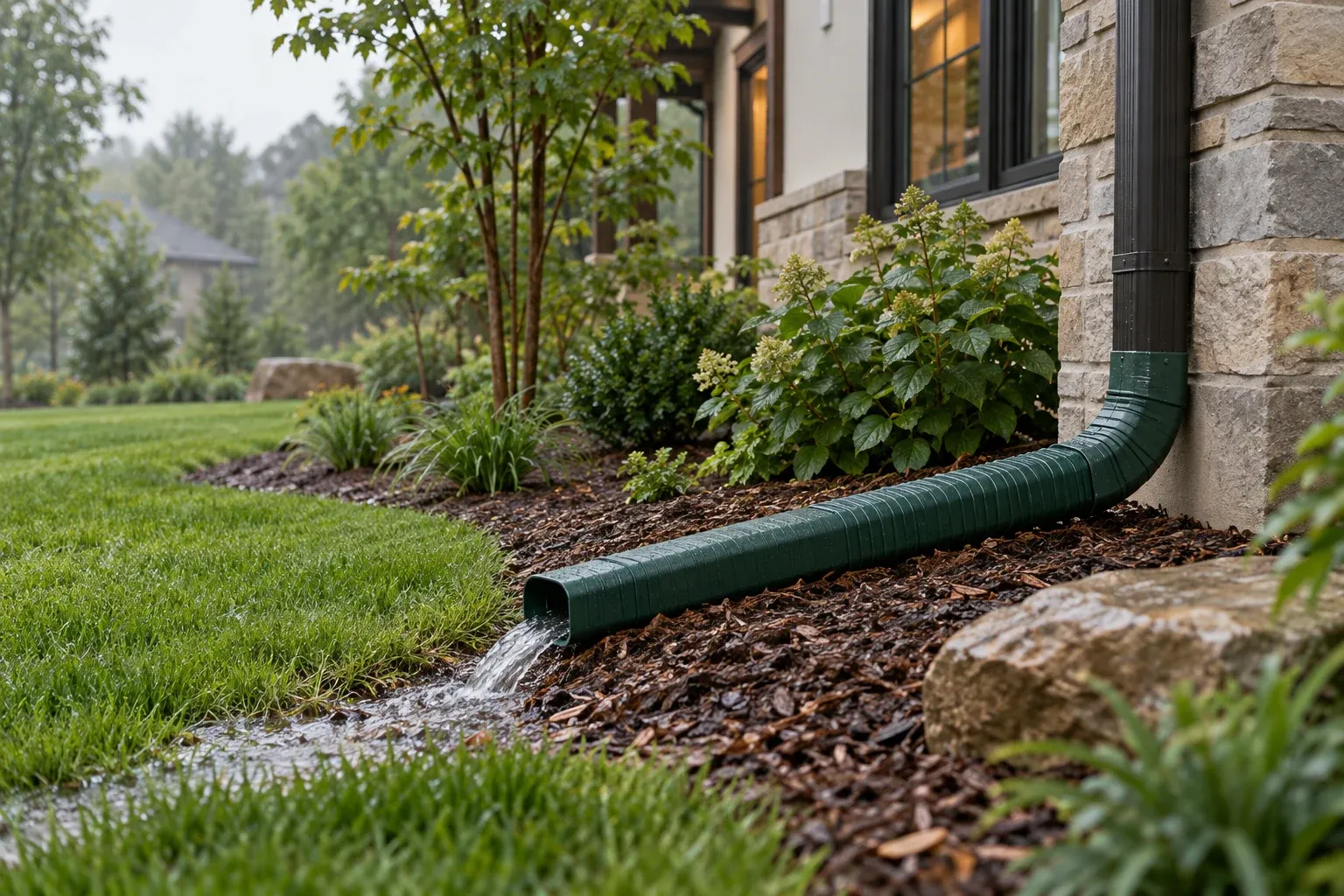
Where the water goes matters as much as how. The City of Tulsa's residential guidelines say a property must accept and pass along drainage without damaging its neighbors, can't block water flowing onto it from off-site, and must send its own extra water to the street or another approved outlet where possible. The same guidelines apply the city's grading and drainage plan requirement to regrading as well as building, so check with the city before reshaping a lot inside Tulsa. Outside Tulsa, ask your own city.
Any fix that means digging starts with a call to OKIE811. Homeowners must contact OKIE811 at least three business days before they dig, and the locate is free.
Common questions
How long should water stand in a yard after rain?
No more than 48 hours. OSU Extension's downspout guide uses that limit for yard drainage, and its drainage fact sheet says most lawn grasses recover from flooding that lasts less than three days.
Why does my yard flood when my neighbor's doesn't?
Usually grade and soil. A lot lower than its neighbors collects their runoff, and clay soil or a shaded corner holds water longer. OSU's ribbon test and the USDA Web Soil Survey show what soil you have.
Can I fill the low spot with dirt?
Away from the house, yes. OSU says raising the surface with sandy loam or loamy sand helps. Next to the house, don't build soil up over brick, siding or framing, because those stay wet and cause bigger problems.
Will a French drain fix a wet yard on clay?
It can, if it has an outlet lower than the drain: a pipe that daylights downhill, a dry well or a sump pump. One of OSU's case studies is a French drain that floods quickly in storms because the neighbors' runoff crosses the yard, so a drain alone may not be enough.
Do I need to call 811 before digging a drain?
Yes. OKIE811 says homeowners must contact it at least three business days before digging, and locating buried lines is free.
Fixing a wet yard
We install French drains, grading and downspout fixes for yards in Jenks, Bixby, Glenpool, Sand Springs and Sapulpa. We watch where the water comes from and where it collects, check the grade, find where it can safely discharge, and put the fix in a written quote. See how we handle drainage or send us photos of where the water sits.
Sources: Oklahoma State University Extension, BAE-1542: Addressing Drainage Issues in the Urban Landscape (PDF, July 2020) · Oklahoma State University Extension, BAE-1534: Minimizing Stormwater Runoff by Disconnecting Residential Downspouts (PDF, May 2017) · National Weather Service Tulsa, April climatology · National Weather Service Tulsa, May climatology · National Weather Service Tulsa, June climatology · U.S. Geological Survey, How much water falls during a storm? · Oklahoma Uniform Building Code Commission, 2024 IRC adoption rule (PDF, effective September 14, 2026) · Maricopa County, Building elevation plan requirements (restates IRC R401.3 grading) · City of Tulsa, Residential Building Guidelines (PDF, January 2025) · CDC, About Culex Mosquitoes · OKIE811, Homeowners