
Winter yard prep checklist for Tulsa-area homes
Drain the sprinkler system and disconnect hoses before Tulsa's average hard freeze on November 14, then mulch beds and water evergreens in dry spells.
· Tulsa, Jenks, Bixby, Glenpool, Sapulpa, Sand Springs
The short answer
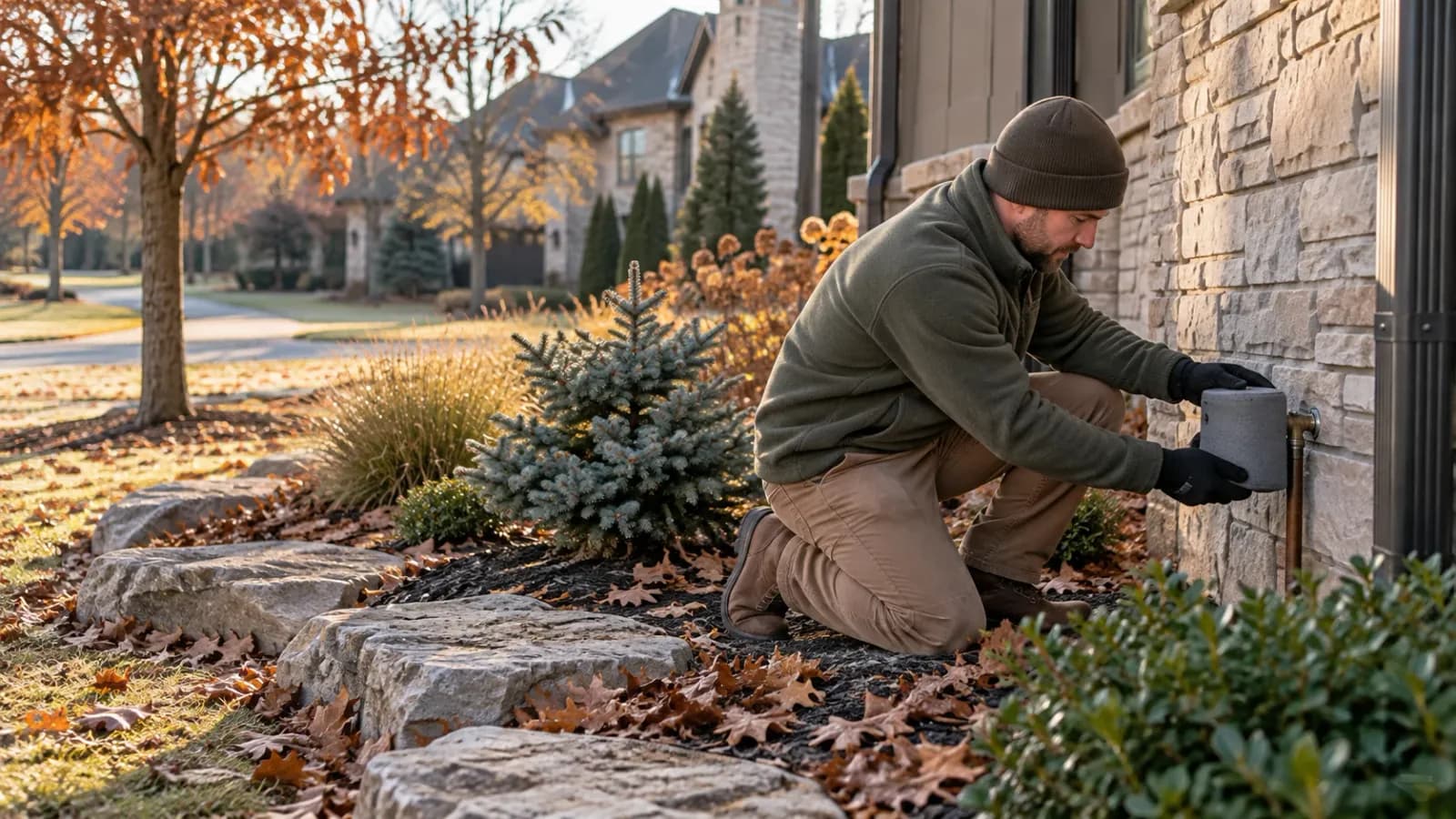
Get the water out first. Shut off and drain the sprinkler system, disconnect hoses and cover outdoor faucets before Tulsa's average first hard freeze, a 28-degree night that lands on November 14 according to National Weather Service records going back to 1906. Then work through the beds: pull annuals, leave healthy perennials standing, and keep mulch at 2 to 4 inches. Through a dry winter, water evergreens about every three to four weeks.
The earliest hard freeze on record in Tulsa came on October 9, 2000. If the forecast shows lows in the 20s before mid-November, move the water steps up.
Before the first frost (average November 3)
These take an afternoon and cost almost nothing.
- Hoses off the faucets. The City of Tulsa's frozen-pipe advice starts here: disconnect garden hoses and install covers on outside faucets. OSU Extension adds: drain the hose and store it in a garage or shed.
- Empty the planters. OSU Extension says frozen soil can crack pots in a wet winter. Wrap hardy planters that stay outside in bubble wrap to insulate the roots.
- Start the leaf rounds. Leaves left in a mat smother grass. Our fall leaf cleanup guide covers timing and city pickup rules.
- Order a soil test. OSU Extension suggests testing this fall so you know what to add in spring.
Before the hard freeze (average November 14): the sprinkler system
Water left in pipes, valves and heads freezes, expands and splits them. Rain Bird's winterizing steps and OSU Extension's line up:
- Shut off the water supply to the irrigation system.
- Set the controller to rain or off mode. Rain Bird says rain mode keeps the clock and your programs while stopping the valves from opening. Unplugging the controller works too, but you'll reset the time and settings in spring.
- Drain the lines. OSU Extension notes that most systems are installed below the freeze line and have drain valves at the lowest point of each zone. Open them to drain the pipes and heads, and close them again in spring before you turn the system back on. If your system has no drain valves, OSU suggests having them added.
- Insulate what sits above ground. The backflow preventer, the main shutoff valve and any exposed pipe all need foam tape or foam tube insulation. Rain Bird warns not to block the air vents and drain outlets on the backflow preventer.
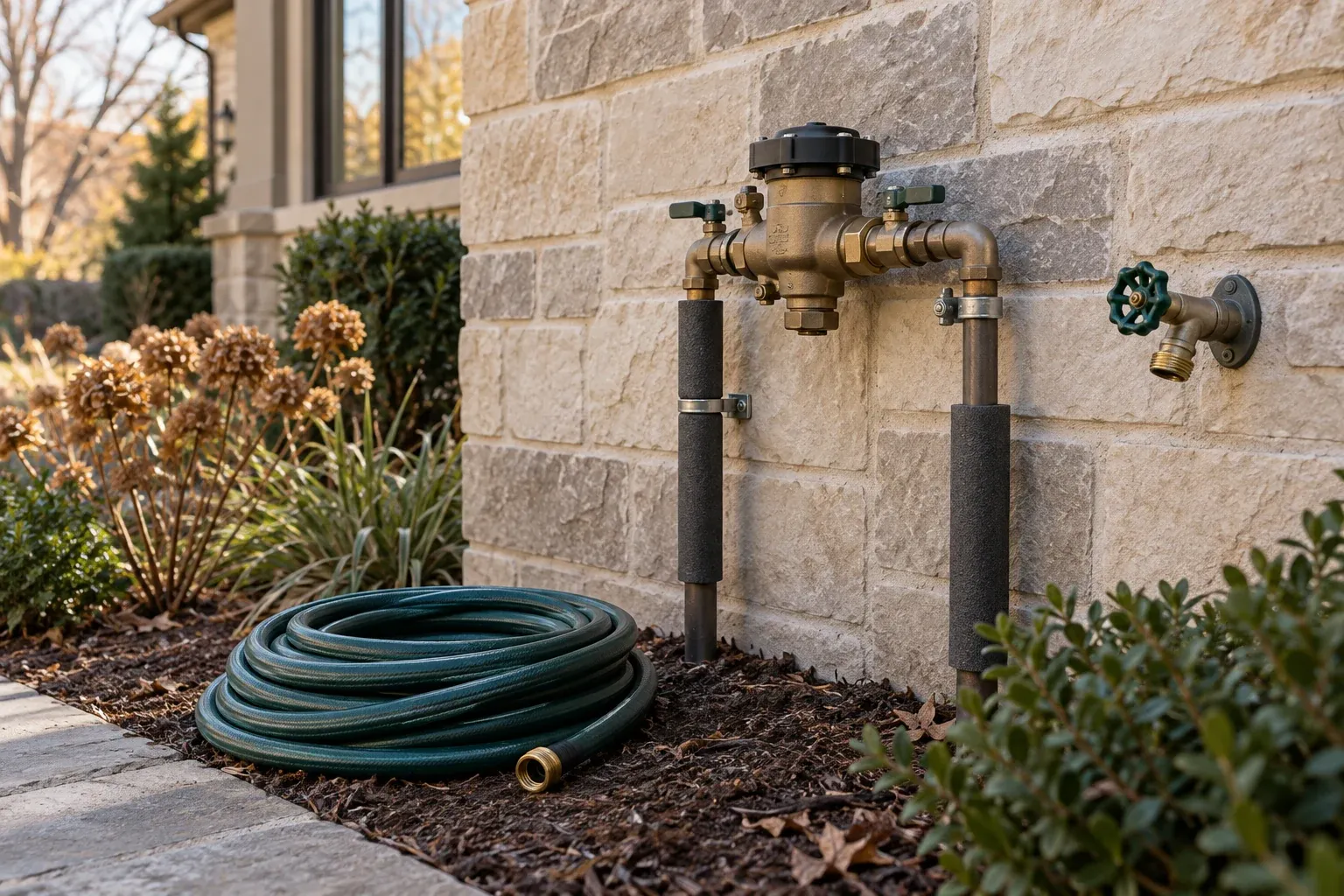
Blowing the lines out with compressed air is the other way to drain them. Both OSU and Rain Bird say to leave that to a professional. OSU warns the wrong air pressure can damage the system, and Rain Bird points to the safety risks.
Beds, shrubs and trees

Pull annuals, leave healthy perennials
OSU Extension's fall cleanup rule: remove annuals, but leave perennials unless they're diseased, dead or damaged by insects. Compost only healthy material. Diseased or infested plants go in the trash, because pests can overwinter in a compost pile.
Leave ornamental grasses standing and trim them in late winter, just before new growth starts.
Hold the pruning
OSU Extension puts tree and shrub pruning in late winter or early spring. The worst time is right after new spring growth appears.
Mulch to the right depth
University of Illinois Extension recommends 2 to 4 inches of mulch: 2 to 3 inches for composted material, 3 to 4 inches for coarse mulch. Keep it at least 4 inches away from tree trunks. A layer that depth insulates roots from extreme winter temperatures and holds soil moisture.
More is not better. Illinois warns that thick layers mat down, starve roots of water and oxygen, hold excess moisture that leads to root rot, and give rodents a place to hide. Top up only where the old mulch has broken down.
The lawn
Bermuda goes tan after frost and stays that way until spring. Our guide on when Bermuda goes dormant explains what's normal. If your yard has fescue under the trees, OSU Extension says to rake the leaves off it so the grass gets sunlight through winter.
The mower and tools
OSU Extension's last step: run gas-powered equipment until it's out of fuel, or add a stabilizer to what's left in the tank. Clean and sharpen hand tools before you hang them up.
Winter watering (December to February)
Dormant doesn't mean dry. OSU Extension says all plants need moisture through winter, and narrowleaf and broadleaf evergreens need it most.
- When: after more than a month without rain or snow, when the soil is dry and the days are mild. OSU says to water only when the forecast is above 40 degrees.
- How much: about half an inch, enough to wet the top 6 inches of soil.
- How often: every three to four weeks in a dry winter. After a good rain, wait until the soil dries out.
- Before a dry cold front: water at least 24 hours ahead so the sun can warm the wet soil.
- With the system winterized: use a hose and a hose-end sprinkler, then drain the hose and put it away.
Don't overdo it. OSU warns that cold, saturated soil can rot roots and helps winter weeds sprout. Sprinklers should never run during a hard freeze. Plants under eaves or on covered patios get no rain, so they need water all season.
Common questions
When should I winterize my sprinkler system in Tulsa?
Before the first hard freeze. Tulsa's average first 28-degree night is November 14, but it has come as early as October 9. Shut off the water, set the controller to rain or off mode, drain the lines and insulate the backflow preventer.
Do I need to blow out my sprinkler lines?
Not if your system has drain valves at the low point of each zone. Open them to drain the pipes and heads. Compressed-air blowouts are best left to a professional, because the wrong pressure can damage the system.
Should I cut back perennials in the fall?
Mostly no. OSU Extension says to leave perennials unless they're diseased, dead or insect-damaged, and to trim ornamental grasses in late winter just before new growth.
Do I need to water my yard in winter in Oklahoma?
In a dry winter, yes. OSU Extension says to water about every three to four weeks when it's above 40 degrees, using about half an inch so the top 6 inches of soil get wet. Evergreens need it most.
How deep should mulch be for winter?
Two to four inches, kept at least 4 inches off tree trunks. University of Illinois Extension says that depth insulates roots, and thicker layers can mat down and rot them.
Getting it off your list
Our lawn care plans cover seasonal cleanup, bed care and mulch refresh in Jenks, Bixby, Glenpool, Sand Springs and Sapulpa, and you can book a single seasonal cleanup without a plan. Send us a few photos of the yard and we'll put the work and the price in writing.
Sources: National Weather Service Tulsa, frost and freeze climatology · City of Tulsa, preventing frozen and busted water pipes · OSU Extension, Tips for winterizing a home landscape irrigation system · Rain Bird, How do I winterize my irrigation system? · OSU Extension, Fall garden cleanup · University of Illinois Extension, Proper mulching techniques (PDF) · OSU Extension, Protect the landscape with proper winter watering · OSU Extension, winter watering column (PDF)