
Build · Tulsa area
Pergolas.
Shade over the seating, built as part of the space around it, with footings and materials that suit Oklahoma sun and wind.
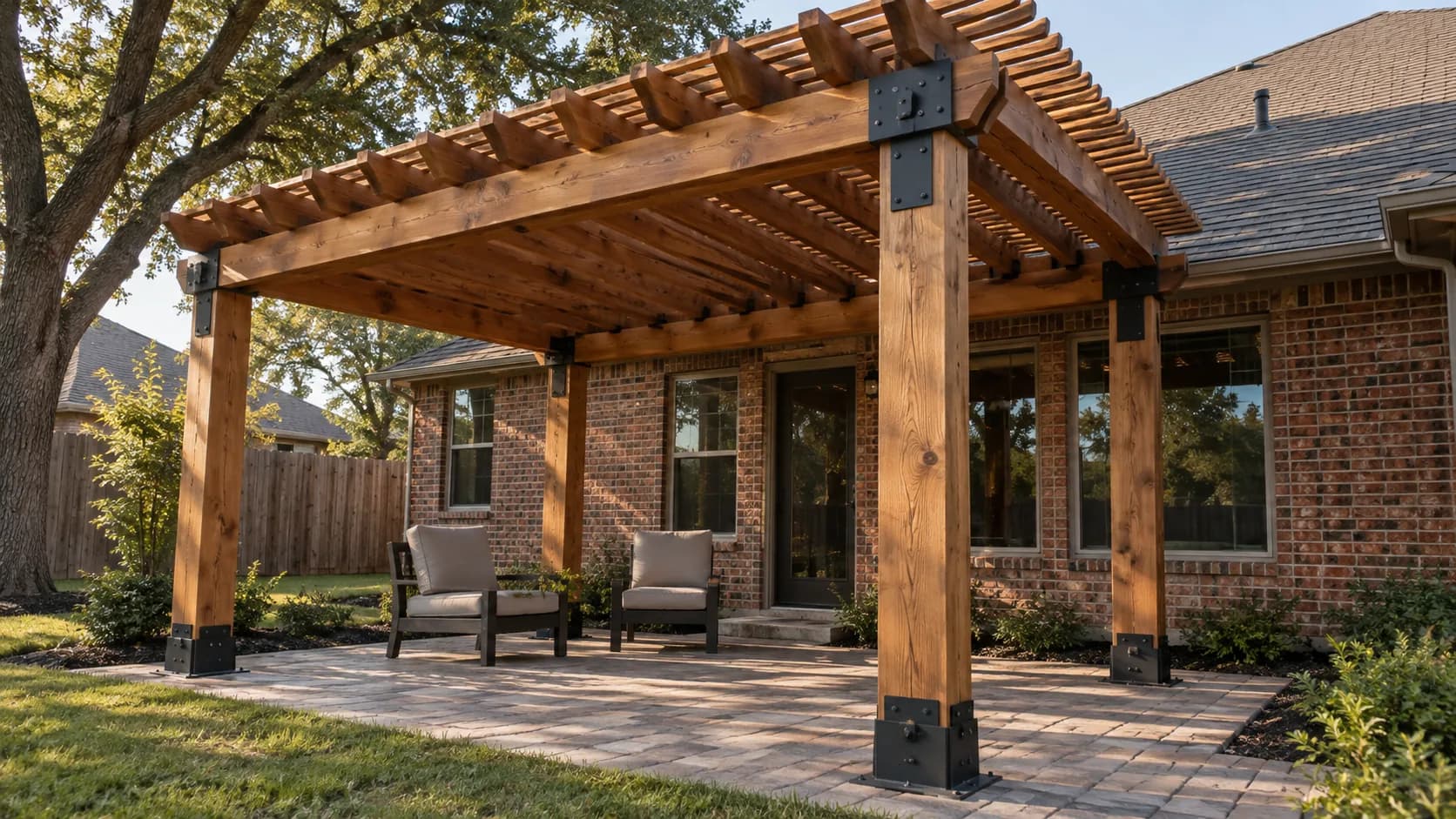
01The problem
When a pergola helps.
- The seating area needs shade, or you want a place to gather around a fire as the evening cools.
- The patio is too hot to use on summer afternoons.
- The yard needs a defined outdoor room, not one big open space.
- An old pergola has rotted posts or loose beams.
What goes under the surface
- 01Fire-rated block
- 02Natural stone cap
- 03Steel or cedar
02Specifics
How it's built.
Permits in Tulsa
Tulsa's residential guidelines don't name pergolas. They do treat covered patios as accessory structures that need a building permit, with a site plan, structural cross-section, foundation and elevation plans, a grading and drainage plan and an erosion control plan.
A detached one-story accessory structure of 200 square feet or less, at least 5 feet from other structures, needs no building permit but still needs a zoning clearance. How the city classifies an open pergola depends on its roof, size and whether it attaches to the house, so we confirm before the build.
Built for the wind
The City of Tulsa's 2019 hazard plan says the building code then required structures to be designed for 115 mph winds. A pergola stands tall and often carries shade cloth or a cover, so the footings, post connections and bracing matter as much as the look.
Wood that lasts
The American Wood Protection Association rates treated posts in ground contact at Use Category 4A or higher, and beams and joists above ground at 3B or higher. The rating is on the end tag or treatment stamp.
With untreated cedar, the USDA Forest Products Laboratory notes that decay resistance lives only in the heartwood, so long-lasting work excludes sapwood. Steel avoids the question and suits a modern house.
03How it goes
From photos to finished.
- 01Send photosUse the quote form to send a few photos and tell us what the yard needs. We review the property and the work you want help with.
- 02We call youWe talk through the details and arrange a site visit if needed.
- 03On siteWe look at the sun, the patio or ground it stands on, the house it relates to, and where the footings can go.
- 04A written quoteThe work, inclusions, exclusions and price, in writing, before you decide to go ahead.
04Price
What sets the price.
Every quote is written for the property. These are the things that move it most.
- Size and height.
- Cedar, treated wood or steel.
- Footings, and whether the patio has to be cut for them.
- Attached to the house or freestanding.
- Shade cover, lighting or fans added to the frame.
- Permit requirements for the design.
05Questions
Common questions.
- Do I need a permit for a pergola in Tulsa?
- Tulsa's guidelines don't name pergolas. Covered patios need an accessory structure building permit, and small detached structures under 200 square feet still need a zoning clearance. Confirm with the city for your design.
- What wood rating should pergola posts have?
- The American Wood Protection Association rates treated posts in ground contact at Use Category 4A or higher. Beams and joists above ground should be 3B or higher.
- Is cedar good for a pergola in Oklahoma?
- Cedar heartwood resists decay; sapwood doesn't. The USDA Forest Products Laboratory advises excluding sapwood where long life matters.
Want some shade?
Send photos of the patio at the time of day it's too hot to use. We work in Bixby, Glenpool, Jenks, Sand Springs and Sapulpa.
Sources
- City of Tulsa, Residential Building Guidelines (PDF, January 2025)
- City of Tulsa, 2019 Hazard Mitigation Plan (PDF): expansive soils and wind
- American Wood Protection Association, Residential use categories (PDF, 2021)
- USDA Forest Products Laboratory, FPL-0153: Comparative Decay Resistance of Heartwood of Native Species (PDF)